
The Rapid Growth of AI in Healthcare
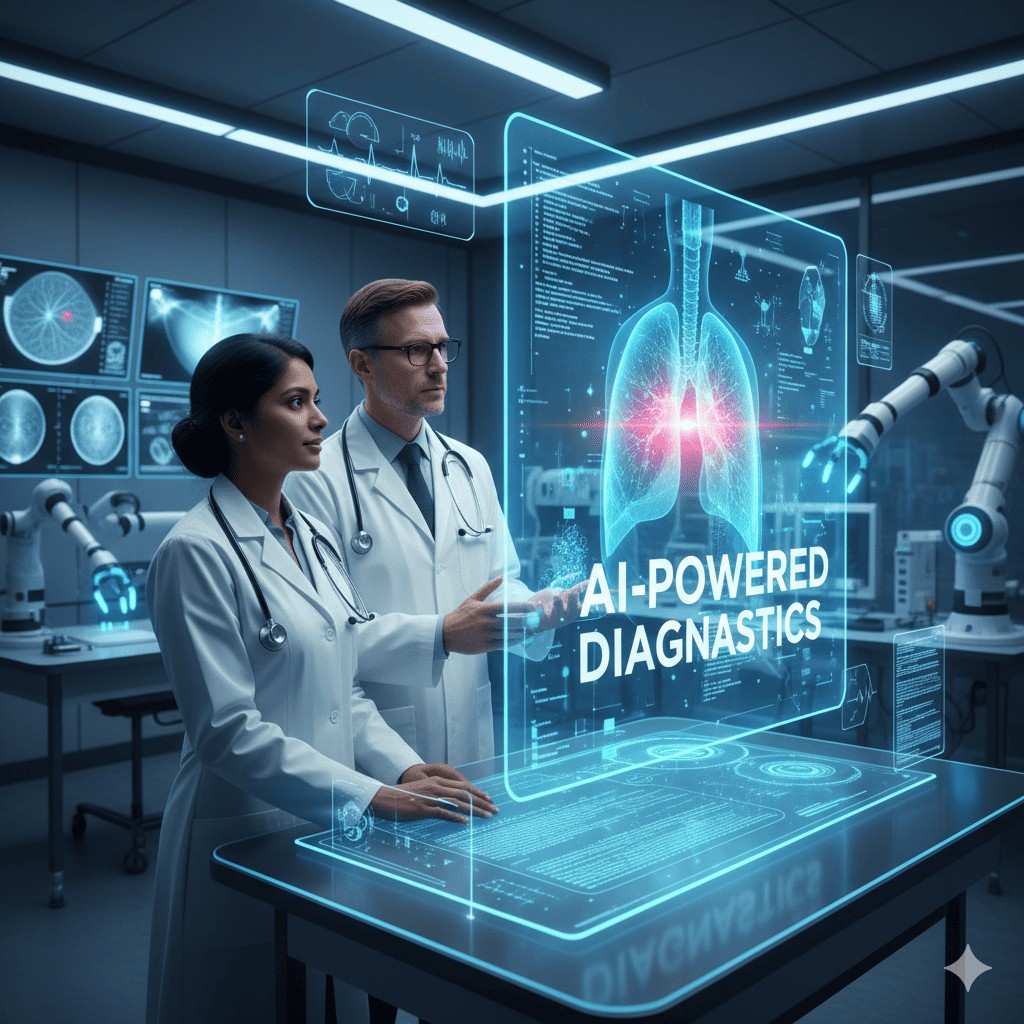
Healthcare diagnostics has been largely revolutionized by the implementation of artificial intelligence (AI). The majority of the processes that needed human medical knowledge and skills and were done manually are being substantially changed by the cross-industry use of the same technologies: advanced algorithms, machine learning, and big data analytics.
Actually, AI in healthcare is the vehicle for the change that was only a prospect a while ago that fixes will be not only correct and personalized but also quicker—a transformation that permeates the whole medical field.
What Is AI in Healthcare?
Machine learning, natural language processing, and computer vision all meld together in artificial intelligence to enable the processing and interpretation of medical data that human analysts would require a very long time to come up with. Through the simplification of the workload, by forecasting solutions, and by aiding the doctor’s decision, AI is very handsomely changing the way the healthcare system works.
The ability of AI in healthcare is to manage enormous datasets from wearable technology, genetic testing, and electronic health records is its true strength in the healthcare industry. AI processes this data to produce actionable insights, aid in personalized medicine, increase the precision of diagnoses, and expedite decision-making. AI in healthcare is revolutionizing the way that doctors identify, treat, and manage illnesses by making the field smarter, quicker, and more effective. The technology promises to lower the overall cost of healthcare services and improve patient outcomes as it develops further.
Key Components of AI in Healthcare Diagnostics
AI in healthcare typically uses multiple technologies that function as one to interpret data, recognize trends, and help medical decision-making. Such features increase the reliability of the diagnosis, the timesaving of the procedures, and the decrease of the possible human mistakes, Now we will talk about some key components of AI in Healthcare Diagnostics.
Machine Learning (ML): Machine learning (ML) works on algorithms that learn from healthcare data progressively. ML models gain the capability to diagnose diseases, foresee results, and suggest therapies by themselves through the process of working on extensive patient records, clinical tests, and diagnostic images over and over again without human intervention for every case.
Natural Language Processing (NLP): NLP allows AI systems to comprehend and make sense of unorganized medical text like physicians’ notes, clinical trial reports, and electronic health records. It makes the information accessible which results in quicker documentation evaluation and giving the medical staff the possibility of rapid access to the necessary information.
Computer Vision: This technology enables AI to visually comprehend and analyze medical images including X-rays, CT scans, and MRIs. The technology is capable of identifying minute abnormalities, for instance, very early-stage tumors or minuscule fractures, that are the most likely to be unnoticed by human eyes. Machine vision is making the processes of radiology more efficient and is elevating the diagnostic accuracy.
Robotic Process Automation (RPA): RPA is used to handle the dull, routine and repetitive administrative tasks that accompany the healthcare industry. Tasks like reporting results of lab testing, inputting patient information, and generating reports can all be automated through RPA which not only reduces the workload of healthcare staff but also makes the whole healthcare process error-free besides allowing healthcare professionals to concentrate on taking care of patients.
Together, these elements work as the core of the AI in healthcare diagnostic system, which is the ability to make medical decisions that are more efficient, accurate and speedy.
The Benefits of AI in Healthcare Diagnostics
Using AI in the diagnostics sector of healthcare has become a game-changer in the industry as it has led the way to accuracy, fast processes, cost reduction, and personalized patient care. The reasons for the adoption of AI in diagnostics in healthcare as given here are not exhaustive.
1. Improved Diagnostic Accuracy: The potential of artificial intelligence to significantly increase diagnostic accuracy is among its most important benefits when it comes to healthcare diagnostics. In order to identify diseases, doctors and radiologists manually examine lab results, patient histories, and medical images in traditional diagnostic procedures, which mainly rely on human expertise. Despite their high level of expertise, medical personnel are also vulnerable to human error, exhaustion, and delays in processing large volumes of data. By using sophisticated machine learning algorithms that can evaluate millions of data points much more quickly and reliably than humans, artificial intelligence (AI) transforms that.
2. Faster Diagnosis and Treatment: The ability of AI to expedite the diagnosis and appropriate treatment of medical conditions is a key component of healthcare diagnostics. In conventional medical settings, diagnosing complex diseases frequently requires a number of steps, including gathering medical history, performing laboratory tests, evaluating medical imaging, and waiting for experts to interpret the findings. Hours, days, or even weeks may pass during this process, particularly in emergency situations or crowded hospitals.By automating the analysis of lab results and medical images, AI-powered diagnostic tools can significantly cut down on these delays. Artificial intelligence (AI) algorithms, for instance, can analyze thousands of X-ray, MRI, or CT scan images in a matter of seconds and accurately spot patterns or abnormalities.
3. Cost Efficiency: Ineffective procedures and unnecessary testing are contributing to the global increase in healthcare costs. By eliminating the need for manual labor in repetitive diagnostic processes like routine blood tests or image analysis, artificial intelligence (AI) helps cut costs. By cleverly comparing patient history, past diagnoses, and current treatments, it also reduces the number of pointless or redundant tests. By focusing resources where they are most needed, hospitals and clinics can run more effectively and lessen the financial strain on patients and providers. By lowering administrative burden and enhancing resource efficiency, AI eventually helps create more sustainable healthcare models.
4. Predictive Analytics for Preventive Care: Healthcare professionals can make highly accurate predictions about future health risks thanks to AI’s capacity to evaluate historical data. AI finds risk factors like genetic predispositions, lifestyle decisions, and environmental exposures by analyzing massive patient record datasets. Predictive algorithms, for instance, can determine years in advance the chance of developing diseases like diabetes, heart disease, or specific types of cancer. Doctors can change the focus from treatment to prevention by recommending early treatment plans, preventive screenings, or targeted lifestyle interventions based on these predictions. This enhances long-term public health outcomes and lessens the overall burden of disease.
5. Personalized Treatment Plans: Traditional “one-size-fits-all” treatments frequently fall short of providing the best care because no two patients are alike. To create thorough patient profiles, AI combines a variety of data sources, including genetic information, medical history, lifestyle choices, and even environmental influences. With the help of these insights, medical professionals can create precise treatment programs that are tailored to the particular requirements of each patient. AI models, for instance, can recommend the best medication based on a patient’s genetic makeup and past medical history. Better treatment results, fewer side effects, and increased patient satisfaction are all attributed to personalized care.
6. 24/7 Monitoring and Real-Time Support: AI-enabled wearable medical devices offer constant, real-time tracking of vital health metrics. Vital signs like heart rate, blood pressure, oxygen saturation, and blood glucose levels are monitored by devices that send data straight to medical professionals. Real-time AI algorithms examine these data streams, identifying anomalous patterns or abrupt shifts. An AI-powered wearable, for instance, could identify abnormal heartbeats that point to atrial fibrillation and promptly notify the patient and the care team. In addition to preventing complications and promoting early intervention, this ongoing monitoring enables patients to stay at home and maintain contact with medical professionals. 24/7 support lowers hospital readmissions and promotes long-term health, particularly for patients with chronic conditions.
Key Applications of AI in Healthcare Diagnostics
AI is already widely used in healthcare diagnostics, Let’s understand how it enhances patient care in the real world.
1. Medical Imaging Analysis: It uses X-rays, MRIs, and CT scans to automatically identify fractures, brain tumors, and lung nodules. For instance, Aidoc offers radiology solutions driven by AI that can quickly detect serious anomalies in head CT scans.
2. Pathology and Laboratory Diagnostics: AI systems automatically examine blood smears and biopsy pictures to identify infections, cancer-like conditions, and other illnesses so that patients can receive better care. For instance, Paige.By locating areas of interest on histopathology slides, AI helps pathologists work more quickly and accurately.
3. Predictive Diagnostics: AI algorithms can forecast the onset of chronic diseases by examining genetic information, lab results, and patient histories. For instance, the smartphone app Cardiogram tracks heart rate through smartwatches and forecasts the likelihood of heart disease.
4. Virtual Health Assistants: Applications such as Ada Health and Babylon Health provide users with a preliminary diagnosis and symptom analysis to help them decide when to seek medical help. To assist and lessen the burden on primary care physicians, they offer prompt recommendations for common illnesses or diseases.
5. Remote Patient Monitoring: Wearable technology driven by AI gathers health data in real time to assist users in tracking their condition. For instance, the Biovitals platform from Biofourmis examines vital signs and identifies early indicators of decline in patients with heart failure.
6. AI-Driven Health Insurance Services: Pattern recognition is used to detect fraud in health insurance claims, and personalized policies adjust prices based on predictive health analytics. For instance, Lemonade Insurance enhances customer satisfaction by using AI to process claims nearly instantaneously.
7. Automated Health Checkup Services: Future solutions will enable patients to receive comprehensive medical examinations from a distance, and artificial intelligence (AI) will evaluate data gathered from wearables and home test kits to identify early disease indicators and improve survival rates.
The Future of AI in Healthcare Diagnostics
With ongoing innovation enhancing diagnostic capacity and accessibility, the future of AI in healthcare appears bright.
- Integration with Genomics: AI will examine a person’s genome to determine the likelihood of inherited diseases and recommend ways to avoid them. For instance, Deep Genomics analyzes genetic variations using AI to aid in the development of gene-targeted treatments.
- Real-Time Health Monitoring: Wearables will develop further, integrating IoT and AI technologies to offer ongoing health evaluations. It will become commonplace to have early warning systems for heart attacks, strokes, or complications from diabetes.
- Advanced Decision Support Systems: AI will combine clinical research, treatment guidelines, and patient data to give physicians precise, fact-based advice.
- Global Health Accessibility: Cloud-based diagnostic tools and AI-powered smartphone apps will increase access to healthcare in underserved or rural areas. For instance, in areas without specialists, Google’s AI-powered eye scan technology aids in the detection of diabetic retinopathy.
- AI in Health Insurance: Insurance companies will be able to provide tailored plans based on AI-generated risk assessments thanks to predictive models, which will increase accuracy and affordability. Fraud detection will keep developing, guaranteeing more accurate and efficient claim processing.
Practical Tips for Maintaining Health in the Age of AI
Personal responsibility is still crucial in healthcare, even with advanced AI. The following useful advice will help you maintain your health and maximize the use of AI diagnostic tools:
Healthy Breakfast: Even though artificial intelligence (AI) is becoming more and more significant in healthcare diagnostics, maintaining good health begins with daily routines, beginning with breakfast. In addition to being crucial for boosting your metabolism, a healthy breakfast also supports sustained energy, mental clarity, and overall wellbeing throughout the day. Because they release energy gradually, whole grains like brown rice, oatmeal, and whole wheat bread are great for breakfast because they keep you full and focused for longer. The body’s immune system and general health are supported by the natural vitamins, minerals, fiber, and antioxidants found in fruits.
Including fruits like apples, bananas, or berries in your breakfast enhances its taste and provides vital nutrients. Maintaining muscle mass, regulating blood sugar, and encouraging fullness all depend on protein. Include lean protein sources like eggs, cottage cheese, Greek yogurt, or plant-based alternatives like legumes or tofu. You can also take proactive measures to maintain good health in the age of artificial intelligence by limiting processed foods, staying hydrated, and emphasizing whole grains, fresh produce, high-quality proteins, and healthy fats.
Healthy Snacks: A well-chosen snack helps maintain energy levels, enhance focus, and ward off unhealthy cravings all day long. Nutrient-dense, minimally processed, whole, natural foods make the best snacks. Because they naturally contain vitamins, fiber, and antioxidants, fresh fruits like oranges, bananas, berries, and apples are great options. Limiting highly processed snacks, which are frequently heavy in added sugar, refined carbohydrates, and unhealthy fats, is also crucial. Select natural substitutes for packaged pastries, candy bars, and chips. For example, a homemade trail mix made from nuts and unsweetened dried fruits provides a tasty, healthy choice free of added sugar and preservatives.
Health Drinks: While technology has made it easier than ever to monitor and manage our health, selecting the right health drinks is essential for promoting general wellbeing. In addition to avoiding fatigue and dehydration, maintaining adequate hydration supports bodily processes like digestion, circulation, and cognitive function. Choose natural, nutrient-rich beverages over sugary sodas or energy drinks. Green tea and chamomile are two examples of herbal teas that are great for daily consumption because they contain antioxidants that promote metabolism and lower inflammation.
Another excellent choice is coconut water, which naturally restores electrolytes like potassium and magnesium, which are critical for hydration and muscle function, particularly in hot weather or after exercise. When ingested in moderation, freshly squeezed fruit juices offer vital vitamins and minerals without the addition of sugar or preservatives. You can maintain balanced hydration and more intelligently and efficiently support your body’s needs by selecting natural, low-sugar health drinks and utilizing AI insights.
Regular Health Checkup: Regular health examinations are still necessary for preserving long-term wellbeing, even with the development of sophisticated AI technologies in healthcare. Though they can analyze vast amounts of data, identify early disease symptoms, and offer predictive insights, AI-powered diagnostic tools are most effective when used in conjunction with conventional medical care. One crucial piece of advice is to make appointments with your healthcare provider once every six months, even if your wearable technology or health app indicates that everything is good.
Health Is Wealth
In the modern world, where AI in healthcare is revolutionizing, the adage “health is wealth” has never been more true. Although AI is making it easier than ever to monitor, evaluate, and enhance our health, individual accountability remains the cornerstone. We can live fully, work efficiently, and enjoy life without being constrained by avoidable illnesses when we are in good health. For instance, AI-enabled wearable technology, such as smartwatches, continuously tracks activity levels, sleep habits, and heart rate. In addition to gathering data, they offer real-time alerts and personalized insights in the event of anomalous occurrences, like irregular heartbeats or unusual spikes in blood pressure. AI enables us to take preventative measures and remain informed. Therefore, even in the era of artificial intelligence, our health is still our most valuable asset, driven by thoughtful daily decisions but aided by technology.
Challenges and Ethical Considerations
AI is transforming healthcare by facilitating predictive care, expediting treatment, and improving diagnostics, but it also presents a number of significant ethical issues and challenges. Among the main obstacles are:
Data Privacy and Security: Data security and privacy have become major issues as artificial intelligence is used more and more in healthcare. Large volumes of private patient data, such as genetic information, medical histories, and real-time health metrics gathered by wearable technology, are essential to AI systems. The risk of breaches, illegal access, and misuse of personal data is increased by this reliance on data.
Ethical considerations are just as significant as security. Unintentionally reflecting biases in training data, AI algorithms may recommend different patient populations receive different treatments. Therefore, patients should take proactive measures to protect their data in the era of artificial intelligence. First, make use of safe, reliable healthcare apps or platforms, making sure they adhere to legal requirements. Any accounts that hold sensitive medical data should have strong, one-of-a-kind passwords enabled with two-factor authentication. You should also exercise caution when disclosing your health information to unidentified third-party apps or devices that don’t have explicit privacy policies.
Integration Barriers: Although integrating AI into routine medical practice isn’t always simple, it has the potential to significantly improve healthcare. The availability and quality of data is one major issue. For AI to learn and produce accurate predictions, a large amount of precise and well-structured medical data is required. In practice, patient records are frequently lacking, dispersed, or not standardized across hospitals. Because of this, it is challenging for AI systems to function properly and produce accurate results.
Therefore, get a second opinion if the results seem out of the ordinary and confirm any AI-based diagnoses or recommendations with a qualified healthcare professional. Keep in mind that AI can make mistakes too.
Cost of Implementation: The high cost of implementation is one of the main obstacles to AI’s enormous potential to improve healthcare outcomes. It takes a large investment in hardware, software, and data infrastructure to develop, train, and implement AI systems. To properly manage these systems, hospitals and clinics must also employ specialized personnel, such as data scientists and AI engineers.
Cost is a crucial consideration when implementing AI solutions in healthcare since continuing upkeep, updates, and regulatory compliance further increase the financial burden.
Conclusion
By offering quicker, more precise, and more individualized solutions, the application of AI in healthcare diagnostics is revolutionizing medical care. AI is a vital component of the healthcare industry’s future, with uses ranging from remote monitoring and predictive analytics to medical imaging. Individual accountability is still crucial, though; maximizing the advantages of AI advancements requires eating a nutritious breakfast, getting regular checkups, and consuming healthy snacks and beverages.
Future developments in AI in healthcare are anticipated to include real-time health monitoring, insurance solutions powered by AI, and genomics integration. To maintain safety and trust, ethical behavior and data privacy safeguards must simultaneously keep up with technology advancements. The proverb “health is wealth” will remain relevant in the digital age if people adopt AI-driven diagnostics while upholding healthy lifestyle choices.
Want more useful content? Follow us! – Burnwithpurpose